Are you new to the world of financial trading? If so, you’re probably wondering what some of the best techniques are for making a profit. Luckily, we’ve got you covered. In this blog post, we’ll reveal 4 of the best financial trading techniques for beginner investors. Whether you’re interested in stocks, bonds, or Forex, these methods will help you get started on the right foot. So what are you waiting for? Read on to learn more!
Introduction to Financial Trading Techniques
Financial trading is a complex and highly technical field. However, there are a few basic financial trading techniques that can be used by anyone, regardless of experience or expertise. These techniques include:
- Technical analysis: This is the use of charts and other technical indicators to predict the future direction of stock prices.
- Fundamental analysis: This involves analyzing a company’s financial statements to determine its worth.
- Day trading: This is the practice of buying and selling stocks within a short period of time, often within minutes or hours.
- Trend following: This is the practice of buying stocks based on their trend, rather than their individual prices.

The Importance of Developing a Strategy
In the world of financial trading, developing a strategy is essential for success. Without a set plan in place, traders are essentially throwing darts at a board and hoping to hit bullseyes – an approach that will most likely result in subpar returns.
Strategy development begins by understanding your goals. Once you know what you’re after, assessing the market conditions provides valuable information on how to position yourself for maximum profits. Factors such as stock prices, interest rates, and commodity prices all play a role in determining whether or not it makes sense to buy or sell a security.
Once you have determined your targets, it’s time to devise an approach that takes into account each individual situation. Whether you opt for aggressive buying or selling tactics will depend on factors such as volume and prevailing sentiment. Implementing a winning strategy isn’t always easy – but with enough dedication and perseverance, it can be rewarding indeed.
Fundamental Analysis
One of the most important aspects of successful trading is understanding what affects prices. You need to understand the fundamentals in order to make sound investment decisions and trade with confidence. There are four main areas you can focus on when investigating prices: supply and demand, technical analysis, fundamental analysis, and cycle analysis.
Supply and demand dictates how much a good or service is available at any given time. When one party has more of a good than another, the price will rise. Conversely, when there is an abundance of a good, the price will fall. Technical indicators (such as moving averages) reflect past trends and can help anticipate future movements in prices. Fundamental factors such as company performance and economic conditions can have a big impact on stock prices. Finally, cycles provide insights into regular patterns that may repeat over time or be unique to a particular market condition or sector. Investigating these patterns can help you make better investment decisions overall.
The goal of fundamental analysis isn’t to predict future movements—that’s impossible—but rather to understand why current prices are what they are by examining company performance, financial conditions, analyst ratings and other factors.»
Technical Analysis
What is ?
Technical analysis is the study of price movement and chart patterns to predict future stock prices. Technical analysts use a variety of indicators to identify trends and patterns in the market. These indicators can include moving averages, Bollinger Bands, and channel patterns.
The Benefits of
Technical analysis is a way to study the patterns of prices and volume in order to make informed investment decisions. Technical indicators can help identify potential buying and selling opportunities, and by watching for Patterns, traders can increase their chances of profiting from short-term market movements. One important reason to use technical analysis is that it can provide an objective perspective on markets that can be difficult to obtain through fundamental analysis alone. By focusing on price movement rather than company fundamentals, technical analysts are more likely to find value in stocks regardless of their size or industry classification. Additionally, technical analysis offers a faster way of gauging market sentiment than analyzing financial statements or earnings reports.
Technical indicators are also useful for spotting trends that may otherwise go undetected. By monitoring indicators such as moving averages, Bollinger Bands, and Fibonacci retracements, traders can identify patterns that may signal future price movements. By taking advantage of these trends, traders can increase their chances of making profitable trades even in volatile markets.
While technical analysis is not without its risks, the benefits of using it to make investment decisions are clear. By focusing on patterns and indicators rather than on company fundamentals, traders can increase their chances of making profitable trades even in volatile markets. Additionally, technical analysis offers a faster way of gauging market sentiment than analyzing financial statements or earnings reports.
The Different Types of
Technical Analysis is the analysis of financial charts to find patterns and trends in order to make informed investment decisions. Many different types of technical analysis exist, but they all share a common goal-to provide an indicator of how stock price is likely to move in the short term.
Some popular technical indicators include moving averages (MA), relative strength index (RSI), Fibonacci retracements, and candles. Each has its own benefits and drawbacks, so it’s important to use them intelligently in order to get the most accurate readings.
How to Use
Technical analysis is the use of charts and indicators to predict future price movements. There are many different technical analysis techniques, but the most common are support and resistance levels, moving averages, and trendlines.
To use technical analysis, you first need to understand the basics of charts. A chart is a visual representation of prices over time. You can see the price of a stock, for example, on a horizontal axis and the time on a vertical axis. The height of the line represents how much the stock has changed since that point in time.
To use technical analysis, you first need to understand the basics of charts.
A chart is a visual representation of prices over time. You can see the price of a stock, for example, on a horizontal axis and the time on a vertical axis. The height of the line represents how much the stock has changed since that point in time.
To use technical analysis, you first need to understand the basics of charts. A chart is a visual representation of prices over time. You can see the price of a stock, for example, on a horizontal axis and the time on a vertical axis. The height of the line represents how much the stock has changed since that point in time.
Charts can be quite useful when trying to figure out where an asset is headed. By monitoring charts, you can see if there are any patterns that suggest an upcoming change in price direction or if something other than supply and demand is at work.
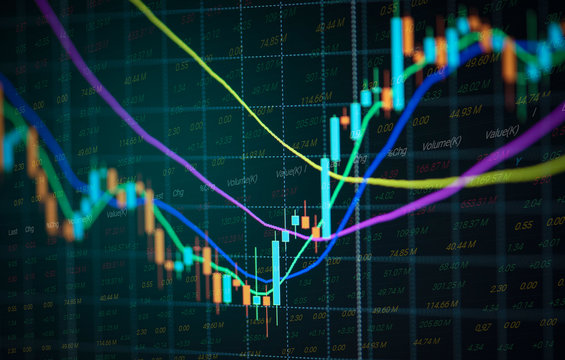
There are a few different types of charts that you can use for technical analysis. The most common are the moving average chart and the candlestick chart.
A moving average is a type of chart that shows the average price of a stock over a certain period of time. The moving average is usually plotted as a line on the chart and is updated every day or every few hours. The purpose of a moving average is to help you identify trends in the market.
A candlestick chart is similar to a moving average, but it shows the actual price changes instead of the average. Candlesticks are also plotted as lines on the chart, but they have two different colors: one for buying and one for selling.
The purpose of a candlestick chart is to help you identify trends in the market. A candlestick chart is similar to a moving average, but it shows the actual price changes instead of the average. Candlesticks are also plotted as lines on the chart, but they have two different colors: one for buying and one for selling.
By monitoring charts, you can see if there are any patterns that suggest an upcoming change in price direction or if something other than supply and demand is at work. Charts can be quite useful when trying to figure out where an asset is headed.

Trading Psychology
Trading is a mental game that can be as exciting as it is challenging. When you’re successful, it feels great. But when you’re not, it can be frustrating. Here are four key trading techniques that can help you overcome the challenges of trading:
Stay disciplined.
When you’re trading, it’s important to have a clear plan and stick to it. If you get sidetracked, you’ll likely lose money. Make sure to set stop losses and take profits according to your plan, and don’t get too emotionally attached to your positions.
Don’t overthink things.
When you’re trading, it’s easy to get bogged down in the details. Don’t try to figure out the future movements of the markets every single time you make a trade. Instead, focus on making educated guesses about where the markets are headed and then reacting accordingly.
Be patient.
It can take a while for the markets to move in your favor, so don’t get discouraged if things don’t go as planned at first. Stick with your strategy and gradually increase your exposure to the market over time until you start seeing results.
Have fun!
Trading can be a challenging and frustrating experience, but if you approach it with a positive attitude, it can also be enjoyable. When you’re having fun, it’s much easier to stay focused and resist the temptation to give up when things get tough.
Risk Management
There is no one-size-fits-all answer to risk management, as the approach that works best for one investor might not be suitable for another. However, there are a few common risk management strategies that investors can use to help control their exposure to potential risks.
One way to reduce risk is by diversifying your investment portfolio across different asset types and markets. For example, by investing in stocks and bonds in the US and Europe, you will reduce the chances of experiencing big losses should global economic conditions change adversely. Another strategy is hedging, which refers to buying or selling an investment with the intention of offsetting any loss or gain that may occur on its underlying position. This can help protect your overall portfolio from major losses while still giving you some upside potential should market conditions improve. Finally, always maintain a level of financial stability by ensuring that you have adequate savings and emergency funds available in case of unforeseen circumstances. By taking these simple steps to managing risk, you can start building a solid foundation for successful trading careers!
Putting It All Together
One of the most important steps in successful financial trading is risk management. This is where you put together a plan to mitigate risks, and make informed decisions about when or how to trade. Some of the best techniques for Risk Management include:
- Trading based on fundamentals – understanding what’s happening in the market and why, can help you make more informed decisions about whether to buy or sell stocks or options.
- Finding an edge – by researching possible strategies that could give you an edge over the competition, you can reduce your risk while still making money.
- Managing emotions – it’s easy to get emotionally tied into a stock or option, so taking some time each day to step back and recalibrate will help keep your investment principles top-of-mind during turbulent times.
- Using stop losses and take profits wisely – knowing when to pull the trigger and sell securities can be tricky, but using good risk management tools like stop losses can minimize loss potential while still achieving your investment goals.

A Sample Trading Plan
Here is a sample trading plan you can use to help track your progress and achieve your financial goals. Make sure to adjust the strategy as needed to fit your individual situation and risk tolerance.
Day 1: Open a buy trade on the S&P 500 Index (SPX) at 2,700 with a stop at 2,650. Day 2: Keep the open position and sell short on the SPX at 2,550 with a stop at 2,500. Day 3: Delete the buy trade from yesterday’s entry and close out all positions. Day 4: Reopen the buy trade from yesterday’s entry but this time set the stop below 2,500.
Thank you for reading! If you have any questions or comments, please leave them below.
 El Mundo del Trading en los Mercados Financieros